7:15 to 9:00 AM, Monday to Friday, for eight weeks. You build real competence on the tools used in virtually every trade, and you earn your safety certifications.
It isn’t a plumbing, carpentry, or electrical tools course. It’s tool confidence across every trade, which is foundational for the more specialized tools of the trade you’ll learn later.
1275 Rymal Road East, Unit 2, Hamilton, ON L8W 3N1
This program does not require approval under the Ontario Career Colleges Act, 2005.
What it is
Comfortable on the tools,in any trade.
The class is built on what companies tell us a new person needs first: trades math and measurement they can trust, then hand tools and power tools used safely. Each step builds on the one before, so your confidence grows with your skill.
01
Measure like it matters
Trades math, measurement and precision with a tape: the skills everything else depends on.
02
Hand tools, then power tools
The tools every trade uses, set up right and used safely, until they feel natural.
03
Prove it on your own
An individual project, built from a drawing to a standard.
04
Then on a team
A team project where you contribute to a real crew.
05
Ready for a site
Site readiness and your safety certifications, so you can step onto a jobsite prepared.
Who it’s for
A start on the tools,for any trade.
Starting out
You want to try the trades with real tool skills and the certifications required on jobsites.
A company’s new team member
A company can send a new hire to start on the tools with the right habits and certifications.
Building toward the diploma
Start here and keep going. What you pay counts toward the certificate or diploma.
What you get
A full backpack.And the know-how.
On the tools 04
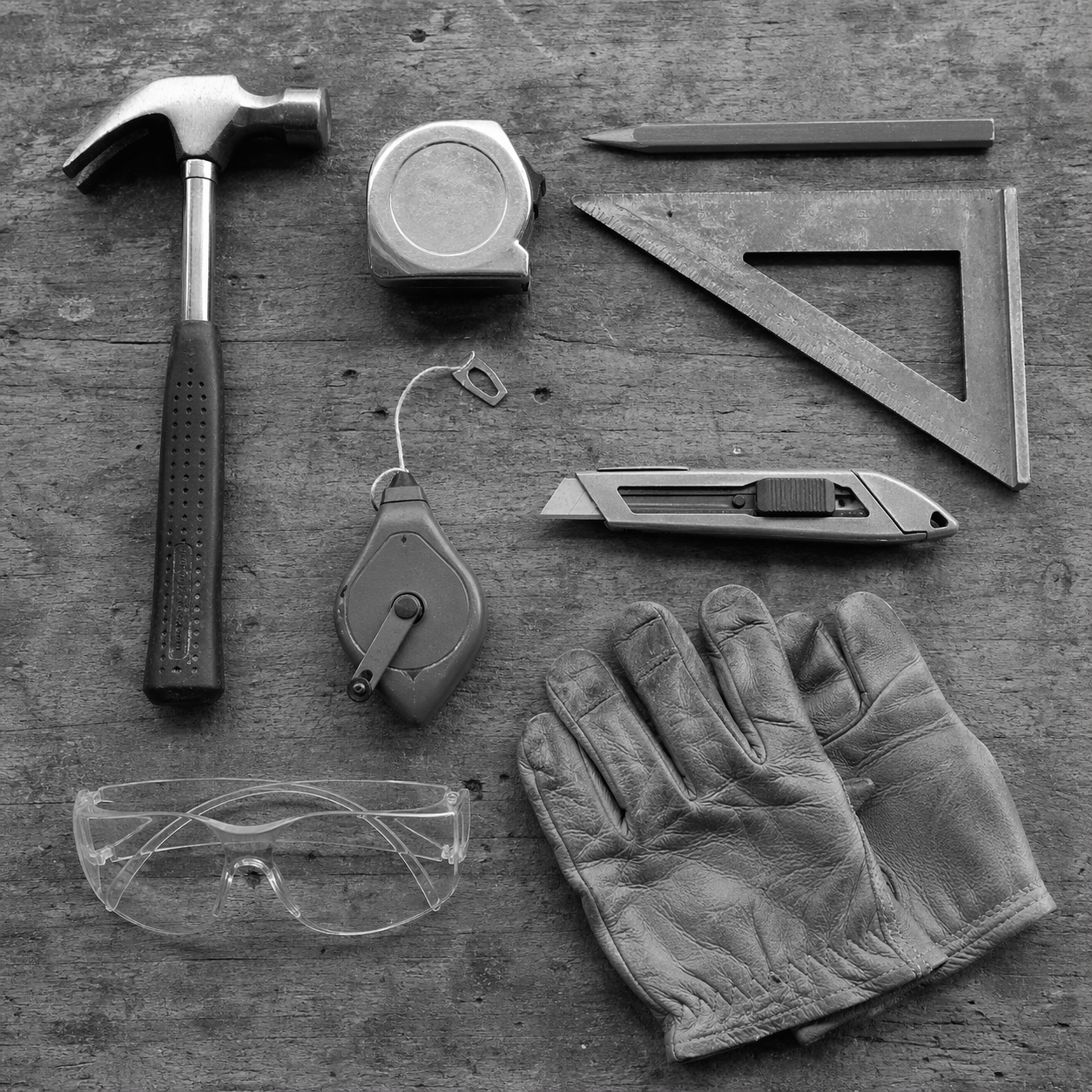
01The backpack full of tools you mastered in class
02Your safety certifications: Worker Health and Safety Awareness in 4 Steps, Working at Heights, WHMIS, Lockout/Tagout and Confined Spaces
You get a backpack full of tools, and each stage builds on the last until you’ve mastered every one of them. The safety certifications run alongside, so you finish with the paperwork you need to work in the trades.
Stage 01
Measurement and trades math
Precision with a tape, squares and levels, and the trades math every job runs on. You must be fluent with basic trades calculations to be useful on a jobsite.
Stage 02
Hand tools
The hand tools every trade uses, on different materials, until they feel natural in your hands.
Stage 03
Power tools
Set-up, guards and safe use first, then repeat cuts and fastening until they’re clean and consistent.
Stage 04
An individual project
You work alone from a drawing and build to a standard, so you can show what you can do.
Stage 05
A team project
You build with a crew, in rotating roles, and learn how one trade hands the work to the next.
Stage 06
Site readiness
Setting up and closing down a site safely, inside and out, the way a real jobsite runs.
Where it fits
Different starts.One path.
Everyone we talk to starts from a different place, and wants the same thing: a career in the trades. Each program is a start on the same path, so wherever you begin, what you learn lines up with where you want to work.
Classes run from $899 to $1,995. For the diploma and certificate, you get the full cost in writing, with your funding plan, in one 30-minute conversation. Scholarships are available for both.
02
Do classes count toward the diploma?
Yes. Every dollar you pay for a class counts toward the certificate or diploma when you start within 12 months. You never pay more than the program price.
03
Can my company pay for a class?
Yes. A company can pay for a class for its own staff.
Next step
Talk it throughwith us.
Next start: January 18, 2027. Book a 30-minute conversation, or call. We’ll answer your questions and help you pick the right start.